Hefford-Hobbs entered the firearms sector through a technical route. He completed a four-year apprenticeship in instrument making before studying manufacturing engineering at university. His interest in gunmaking led him to Oxford University, where he went up to undertake a research master's degree focusing on the design of English game guns from 1851 to 1951, a period he considers one of the most significant in the development of sporting firearms. He has since been elected a Fellow of the Royal Academy of Engineering, a charity delivering public benefit, a National Academy providing progressive leadership, and a Fellowship bringing together an unrivalled community of leaders from every part of engineering and technology. The Academy's Patron is His Majesty King Charles Ill.
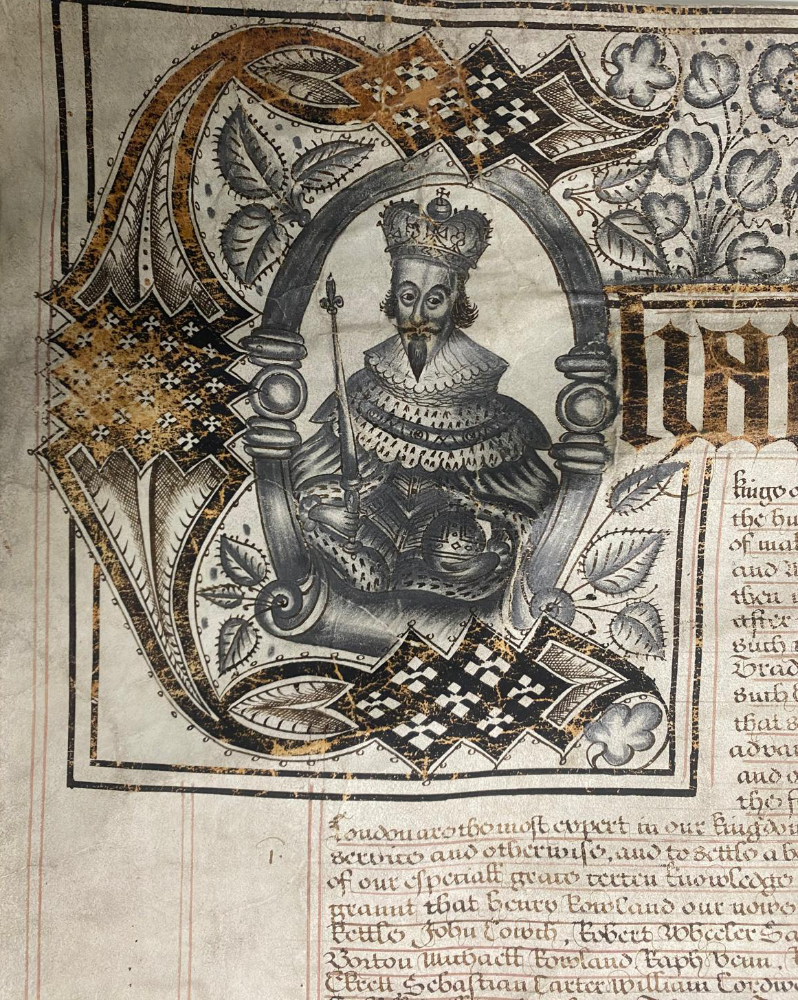
Although best known today for its ceremonial and civic presence in the City of London, the Worshipful Company of Gunmakers began life as a working guild. The company was founded by Royal Charter under Charles I on 14th of March 1637, following a successful petition by Henry Rowland, the first Master. At the time, handheld firearms represented an emerging and strategically important technology. Several established craft guilds, including the Blacksmiths and Armourers, were competing to supply weapons to the Crown. Standards varied significantly with such an array of makers, and in the absence of trade regulation there was no consistency in design, quality, interchangeability or service reliability.
Hefford-Hobbs notes that this lack of standardisation created serious concerns. A musket produced by one guild might require a uniquely cast musket ball for that firearm, and with no interchangeability of parts between weapons from the same maker. Independent gunmakers, frustrated by attempts by other guilds to restrict their activity, petitioned for a separate organisation with the authority to regulate the trade and ensure safety. And with the risk of the Spanish invasion, a group of gunmakers petitioned Elisabeth the l st, this first petition failed.
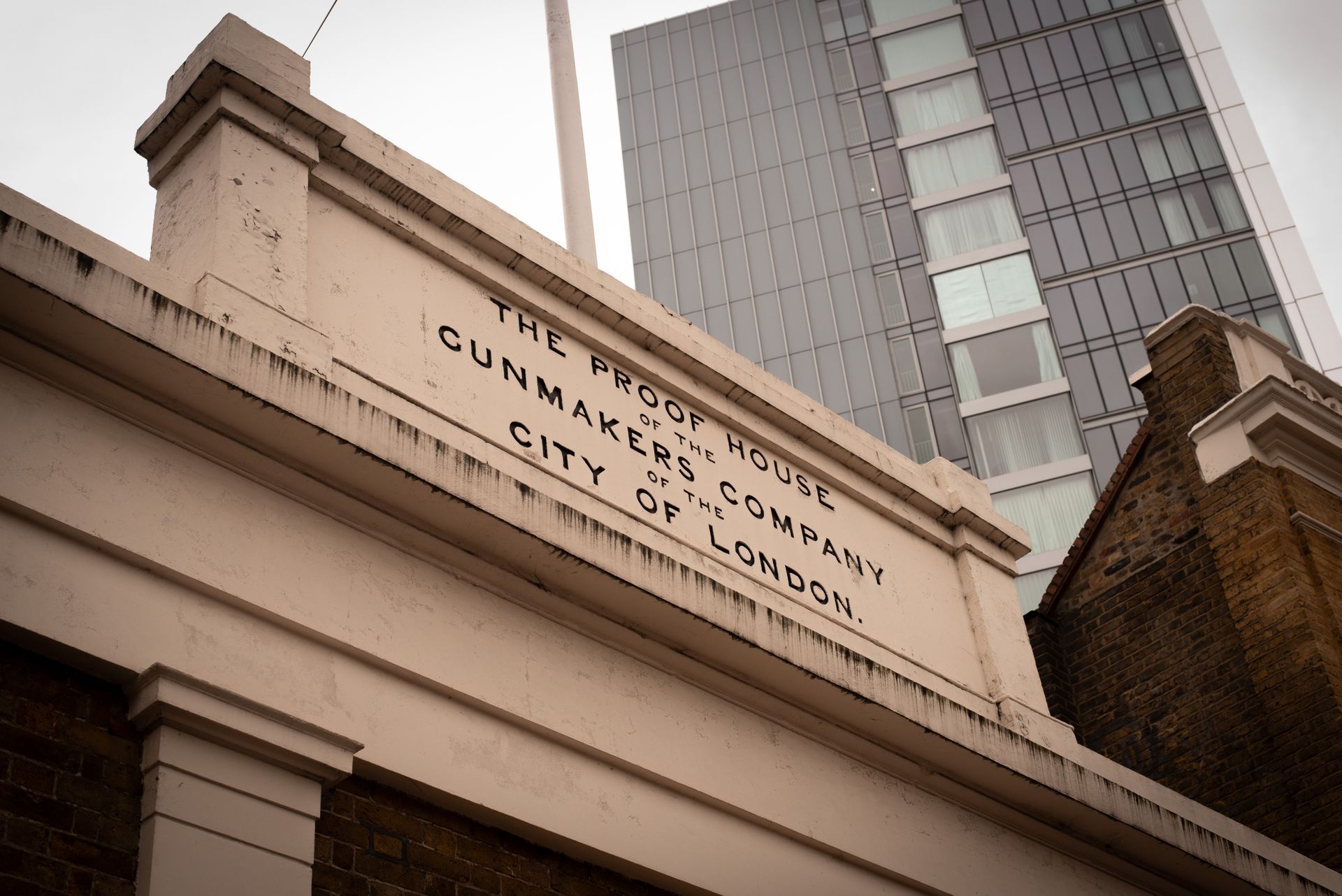
The subsequent petition lead by Rowland in 1637 saw the charier granted, with the gunmakers coming together establishing the Worshipful Company of Gunmakers as a distinct body responsible for overseeing the quality of firearms manufactured in London. The company commenced work by constructing its first proof house near the Tower of London. The proximity to the city wall created anxiety among the Court of Aldermen, who feared the testing process might cause structural damage. Those fears proved justified when the original proof house was destroyed in an accident. As a result, the proofing operation moved in 1675 to Whitechapel, where ii remains today. The current proof house, set within Georgian buildings on Commercial Road, has been in continuous use for almost 350 years. The Gunmakers are unique having always been outside the city walls, and to this day are one of only two ancient working Livery Company's - the Goldsmiths being the other. They assay gold and silver with their hallmark, the Gunmakers prove guns for public safety their assay marks the Crowned GP, which is still being applied 400 years later.
The London Proof House is unfamiliar to many certificate holders and members of the public, yet every gun sold in the UK is legally connected to the work that takes place there and at its counterpart in Birmingham. Whether newly built, newly imported or newly re-barrelled, every firearm must pass proof before entering the market. This obligation originates from the company's founding charter and later Acts of Parliament, which maintain the gunmakers core powers, defining the authority and responsibility of the Worshipful Company of Gunmakers in ensuring firearms are safe for public use.
While proofing is rooted in tradition, Hefford-Hobbs emphasises that the company has consistently innovated and adapted to new technology. One of its most notable technical leaders was Athol Purdey, who helped modernise proof methodology by moving away from traditional shot-and-powder measures towards the now internationally adopted pressure-based testing. The UK is a CIP member state but continues to operate under the principles defined by its charter, acts of parliament and subsequent legislation. As previously mentioned, the hallmark of the gunmakers, the crowned GP for gunmakers proof and the crowned V for viewing remains an internationally recognised indicator of safety, regulation and compliance.
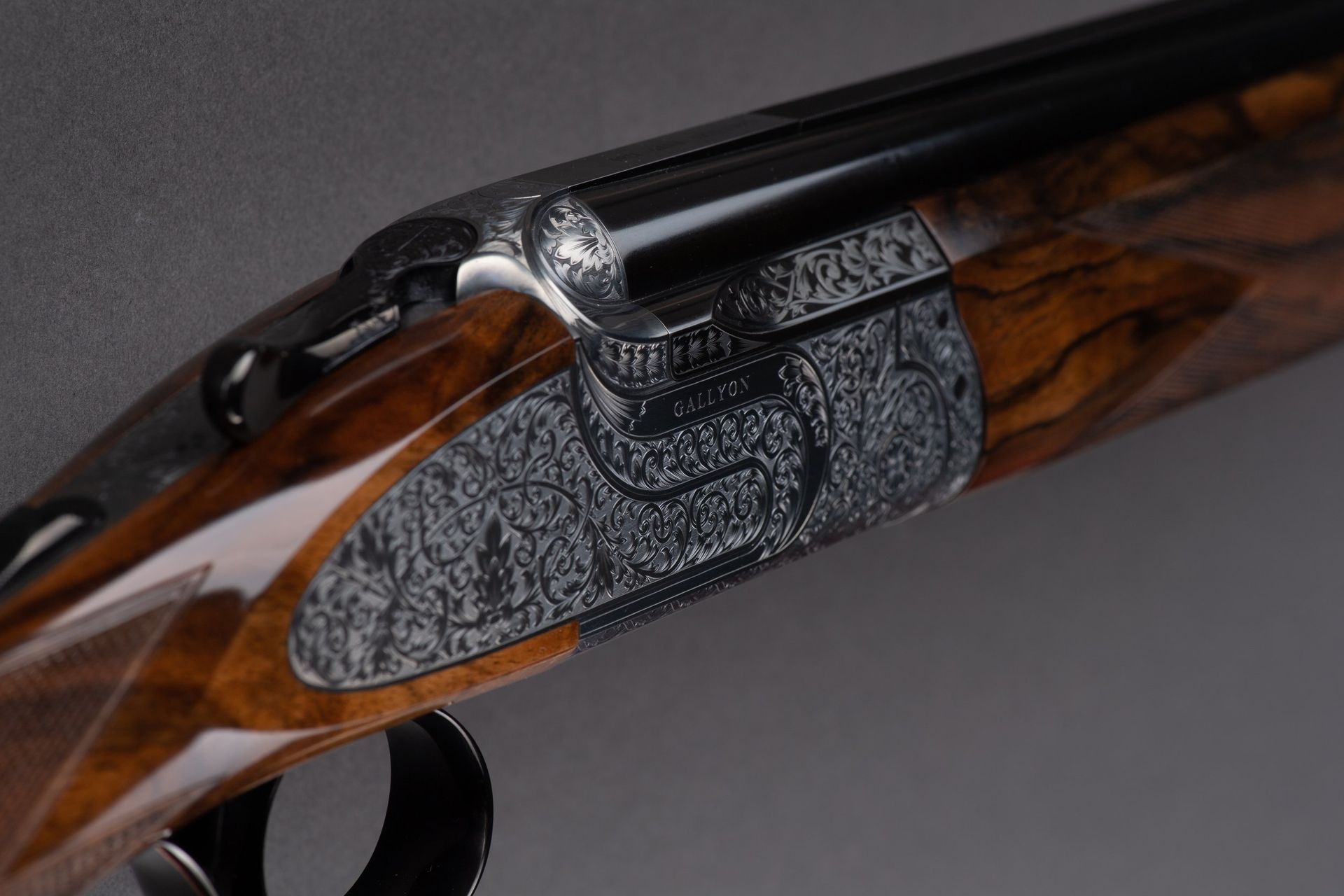
Beyond its regulatory duties, the Worshipful Company maintains its longstanding commitment to education, skills development and craft preservation. Through the Gunmakers Trust, it provides bursaries to support apprenticeships and training across the trade. This investment is increasingly important, Hefford-Hobbs explains, because the skills required in traditional gunmaking are intangible and can only be acquired through extensive hands-on experience. His own son trained under a trust-supported apprenticeship before specialising in bolt rifles and later joining Gallyon Gun and Rifle Makers.
The company also operates a certification panel that accredits working gunmakers, both journeyman and Master gunmakers. Mosler gunmakers are given the post nominal MAsR.G. This process of overseeing the quality al the art, craft and mystery of gunmaking has been conducted since the Company's founding and is defined as one of the Company's powers in its Royal Charter.
Candidates present a portfolio of work to a peer-review panel which assesses competence and quality of the craftsmanship. It is this ancient system that demonstrates the company's historic responsibility for upholding training and quality within the trade.
Membership of the livery, which is distinct and separate to the commercial activities of the proof house, comprises freemen and liverymen who join through a formal process overseen by the Court of the company. Applicants require sponsors, must make two declarations, and, if not already free of the City of London, petition the Chamberlain's Office for that status. The clothing ceremony, during which the beadle places the livery gown on a newly appointed liveryman, remains one of the most distinctive and ancient traditions of the Company. Today the livery is made up of a diverse group of gunmakers, engineers, collectors, heritage specialists and individuals with professional or academic interest in the history of arms and armour.
Recent years have seen a deliberate effort to welcome working gunmakers to strengthen the company's relevance and younger members. The Company increasingly attracts international members, particularly from the United States, many of whom find the combination of heritage, ceremony and technical purpose unusual but compelling. Hefford-Hobbs recently handed the keys of the Worshipful Company of Gunmakers to the new Master, Nicole Brocklebank-Fowler, who becomes the second woman to hold the role and the first American woman to do so. Her background in a major global engineering consultancy brings additional expertise to the leadership team.
looking ahead, Heffard-Hobbs acknowledges the challenges facing British gunmaking. Regulatory scrutiny, cultural pressure and the well-documented difficulties with firearms licensing all place strain on the trade. Recruitment of skilled craftspeople remains a significant concern, with demand for highly trained actioners, stockers and finishers exceeding supply. The preservation of traditional skills depends on long-term commitment to apprenticeships, sustained investment and the support provided by organisations such as the Gunmakers Trust.
Yet the strengths of British gunmaking endure. The combination of heritage, craftsmanship and high technical standards maintains international demand for British rifles and shotguns.
The continuing work of the Worshipful Company of Gunmakers, a Carolean Company and the home of British proof, that continues to oversee proof, upholding safety on a site it has occupied since 1675, and nurturing future generations provides a foundation that has remained constant for nearly four centuries. For businesses such as Gallyon and for the wider trade, that continuity offers a reassuring stability in a fast-changing
landscape.